
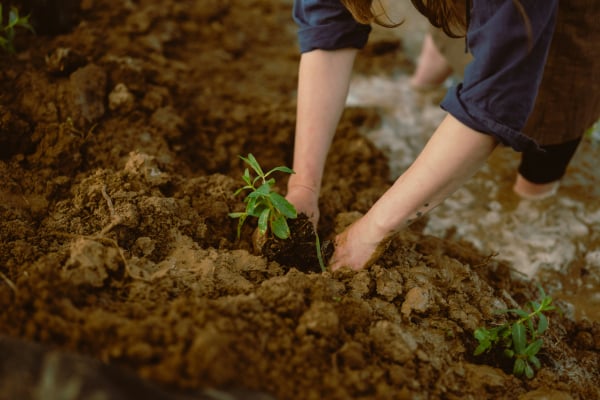
Repotted
The challenges of moving overseas often force cross-cultural workers to grapple with the source of their identity and worth. Christar worker Christina shares how leaving the familiar behind helped her experience true security in Jesus.
I often feel most stable and in control when I have consistency and structure in my life. When I moved to the Middle East, I agreed to be repotted.
Travel and being an expatriate can be romanticized, but I also knew it would not be a walk in the park. And it was surely not. I was yoinked out of my comfortable pot and given a thorough shake—familiar dirt falling away, roots dangling in the breeze. Then I was plopped into different soil in a different pot and had to figure out which way was up.
While you can avoid transplant shock when repotting plants, culture shock is not so easily evaded as a human. Although a new language, a new culture and a new sense of self and identity are normal parts of serving cross-culturally, all are challenging. As what once gave me a sense of stability was stripped away, I was confronted over and over again by the truth that my security is found in Christ alone.
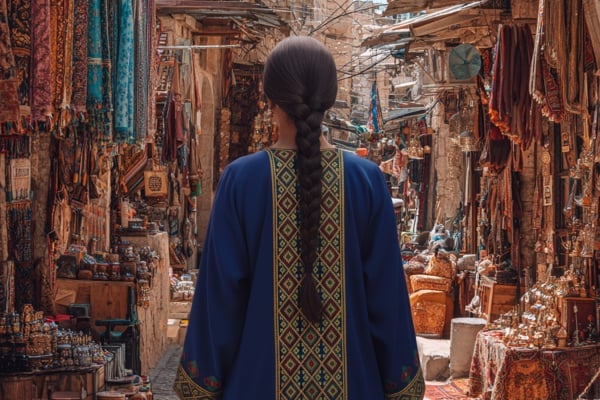
As the plane touched down, I looked out the window and saw brown buildings, brown trees, brown dirt. The repotting process had begun. Knowing only a couple of words in Arabic and some cultural basics, I lost much of my ability to communicate and interact with the world around me. On day one, my roommate and I couldn’t get our internet set up in our new apartment. In the U.S., I would have called customer support right away and gotten everything sorted out. But I was unable to understand the menu options when I called the support number. And even when I was able to guess the correct numbers and get to an English-speaking customer service agent, the Arabic-only repairman would call me, and we would get stuck again. After a dozen phone calls, several repairmen and a full month, the Wi-Fi was finally up and running. I used to draw on self-competency and persistence, but I was coming up empty in my new pot.
Daily living in the Middle East took more energy: so many things were different and more complex. Bills were paid in person, not online. Propane for cooking and heating was ordered from the building guard or a truck blasting the ice cream truck song and slowly weaving up and down streets. Drinking water was ordered through the building guard or through a local shop. Produce needed to be deep-cleaned. Tap water of questionable sanitation and lots of uranium came from a tank stored on the roof that was filled weekly, if you were lucky; once you ran out, that was that. Toilet paper clogged up the plumbing, so it needed to be collected in a bin and then taken to the dumpster. Addresses technically existed, but no one used them. You used landmarks and location pins on WhatsApp. The call to prayer went off five times a day, with the 5 a.m. one being particularly disruptive. I went from being able to do 10 things in a day to being able to do two or three.
I love hearing people’s stories, ideas and perspectives as it fosters a feeling of connection and community. Without Arabic, I felt cut off. Nothing on earth is as humbling as language learning. Four hours of language school depleted my mental energy for the day, and I still barely understood what was happening around me. I was back in preschool at 25, and I was not crushing it. I confidently said all the wrong greetings, mispronounced words so badly that they unintentionally turned into expletives and scrambled numbers every which way to Sunday. How had I ever taken for granted the ability to check a price tag or read labels on products? Not being able to express myself or connect with others felt like losing my voice. In Arabic, I could only whisper.
As my prior sense of efficiency and productivity fell away, I returned repeatedly to the truth that my worth is not in what I do. It might be easy to know, but it is far harder to believe.
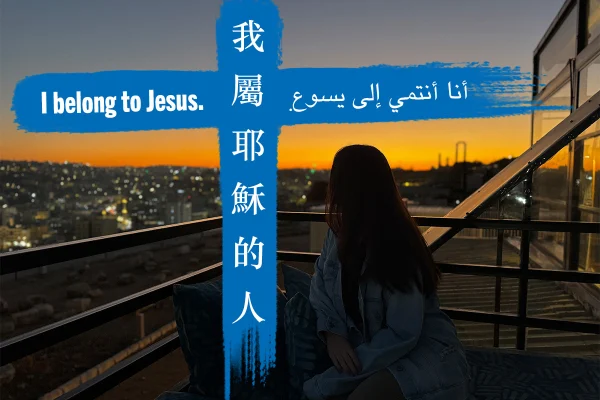
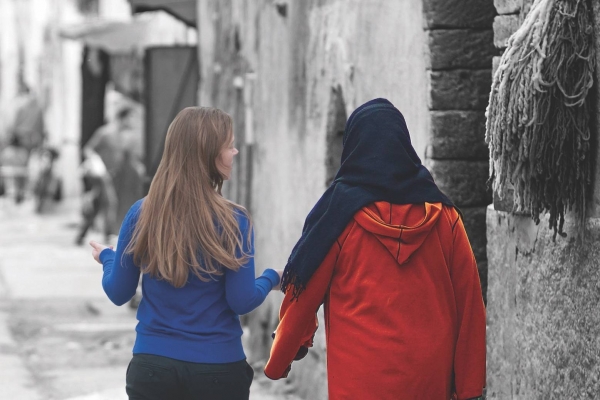
Leaving the familiar for the unfamiliar forced me to reevaluate where I place my identity and worth. Yet Jesus patiently walked with me as I got reestablished and took root. Surrounding me with new friends, He provided over and over for me. When I had COVID and could not get groceries, my Arab friend brought me bread, soup and oranges. When I needed help buying chairs, my friend’s father came along to handle the salesman. When I needed to buy blankets, gifts and clothes, my new community came around me and made sure I did not get taken advantage of.
Hebrews 13:8 says, “Jesus Christ is the same yesterday and today and forever.” Life circumstances brought me back to the U.S. this year. As I have once again been uprooted, shaken and repotted, Jesus continues to be faithful, unchanging and the only one who can give me the stability I long for.
Related Projects
Related Stories





_1623444031_600x400.jpg)


Related Resources
_1654032461_600x400.jpg)
_1583365425_600x400.jpg)